Painting Steel Farm Buildings, Roofs, Silos and Tanks
Steel doesn't forgive a rushed paint job, and the roof, the seams and the fasteners are where it shows first.
October 27, 2026 · 3 min read
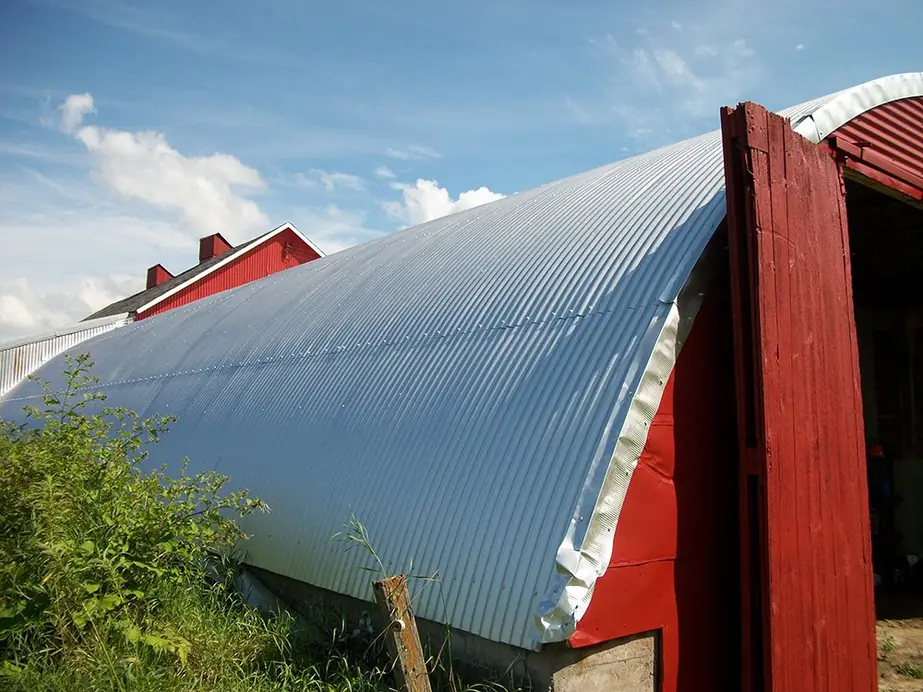
Steel buildings are everywhere in farm country, and they work hard. Machine sheds, barn roofs, arched quonset buildings, silos and tanks sit in sun, snow, rain and wind, plus whatever the farm adds, from dust to feed to manure. Painting them is a different job from painting a house. We do industrial and farm painting alongside our residential and commercial work, and the same rule applies: top-tier surface prep is the key to our success.
Where steel fails first
On most steel buildings, trouble starts in a few predictable places. Roof seams and the heads of fasteners collect water, and the metal around them rusts first. Edges and cut ends are thin spots in any coating. The bottom of wall panels stays damp from splashing and snow. Roofs take the most sun, so paint chalks and fades there before it does anywhere else. On older buildings, factory finishes have often worn through in patches, and bare metal is exposed.
Condensation matters too. Warm, moist air inside a building meets cold metal and drips, which can rust a roof from underneath while the outside still looks fine. Painting the outside doesn't stop that, so tell your painter if you see drips, rust stains inside or damp insulation.
Prep comes first, and steel needs more of it
Paint doesn't bond to rust, scale or chalk, so steel gets cleaned before anything is applied. Pressure washing takes off dust, manure splash, mildew and loose paint. Where rust has taken hold, wet-and-dry sandblasting or hand-tool cleaning removes it and leaves metal the primer can grip. We use all three methods, usually in combination, depending on what each part of the building looks like.
Then comes primer, and bare metal shouldn't wait for it. Cleaned steel starts to show a light skin of rust quickly, so the primer goes on promptly after cleaning rather than letting the metal sit and weather again.
Different structures, different problems
- Quonset and arched roofs: the curved surface sheds water well, but the ribs and laps hold dirt, and the sun-facing side wears first. Reaching the whole curve is the challenge, which is where lifts come in.
- Barn and shed roofs: fasteners and seams get attention first, since that's where leaks and rust start. Panels need to be sound before they're painted, because a coating is not a repair for metal that has rusted through.
- Wall panels and doors: lower edges, door frames and the spots where equipment bumps the steel need extra cleaning and a careful look.
- Silos: tall, curved and hard to reach. Safe access and a consistent surface decide how the job goes, and much of the effort is in the prep.
- Tanks: what the tank holds, and whether the coating is for the outside or the inside, changes the system. Tell us what's in it and where the trouble is.
Access is part of the job
Height changes how work gets done. Roofs, silo walls and the high sides of tall buildings are reached with aerial lifts rather than ladders, and you can see lifts at work in the photos on this site. Planning where the lift can sit, what is under it and where livestock, feed and equipment need to be keeps the job orderly. Tell us about low power lines, soft ground, gates and animals when we walk the site.
Working on an active farm
A farm doesn't stop for a paint job. Animals need feeding, equipment comes and goes, and grain moves. We'd rather talk through the plan with you first, so the work fits around the days that matter. Moving animals, parking equipment and keeping feed covered are things to settle ahead of time. Pressure washing and blasting throw water and debris, so anything that shouldn't get hit needs covering or moving.
What to ask before you hire
- How will you clean the steel, and what happens to the rusty spots?
- What primer goes on bare metal, and what finish goes over it?
- How will you reach the roof or the top of the silo?
- Are any panels too far gone for paint alone?
- How will I know about problems you find once the cleaning is done?
That last one is where constant communication pays off. Once steel is cleaned, you sometimes find panels thinner or fasteners in worse shape than they looked. We'd rather tell you right then and talk about what to do.
No job is too big or too small for us, from a shed door to a row of silos. To talk about your steel buildings, call Harry Joles Maintain Painting & Sandblasting at (715) 643-5511.
Harry Joles Maintain Painting & Sandblasting, (715) 643-5511
Call (715) 643-5511More articles
Why Surface Prep Decides How Long Your Paint Lasts
The best coating in the can still fails if it lands on a dirty, loose or rusting surface.
What to Expect When You Coat a Log Home
Logs soak, move and weather differently from siding, and a coating job has to account for that from day one.