Stranlok Coatings for Wet and Chemical Work Spaces
Ordinary paint wears out fast where water and chemicals are part of the routine, which is the problem a two-component system addresses.
October 27, 2026 · 3 min read
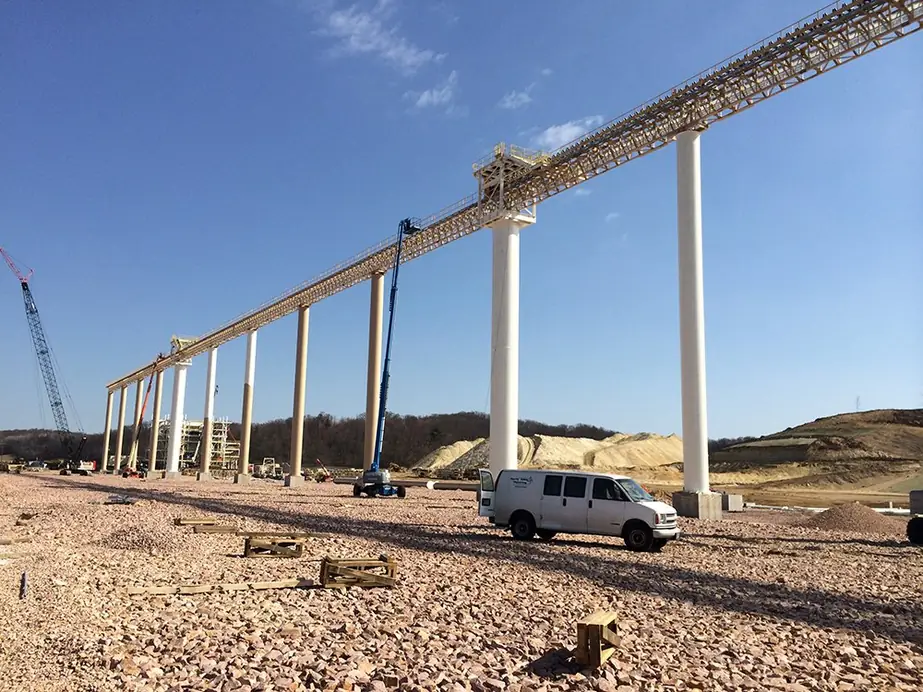
Some spaces are simply harder on coatings than others. A car wash bay is wet all day. A sand plant has abrasive material moving through it and water in the mix. An industrial building may have chemicals splashed on its floors and walls. A tank holds liquid by definition. Ordinary wall paint isn't made for any of this, and it shows. Our industrial painting includes Stranlok fiberglass reinforced two-component coatings, used to create water- and chemical-resistant work spaces. Here's what that means in plain terms.
What two-component means
A one-component paint comes ready to use and dries as its water or solvent leaves the film. A two-component coating comes in two separate containers, commonly a resin and a hardener, and the two are mixed together just before application. Mixing starts a chemical reaction, and the coating cures through that reaction rather than simply drying. The result is generally a harder, denser film that stands up to water, chemicals and wear better than a typical one-component paint. The tradeoff is that it has to be mixed and applied correctly, because once the two parts are combined the clock is running. The mix ratio and working time for any given product come from that product's own data sheet.
What fiberglass reinforcement adds
Fiberglass reinforcement means glass fibers or mesh are built into the coating. Think of it loosely as rebar in concrete. The coating supplies the water and chemical resistance, and the glass gives it body, which helps it hold together across the surface. In work spaces where the surface takes impact or moves a little, that reinforcement is the reason to choose a system like this over a thin film of paint. We also install fiberglass and epoxy mesh to your exact specifications, so if you or an engineer has a spec in hand, we work from it.
Where this kind of coating fits
- Car washes, where walls and floors are wet and exposed to soaps and cleaners all day.
- Sand plant buildings, where moisture, fine material and heavy equipment all work against ordinary paint.
- Industrial buildings and sheds where floors or walls get washed down or splashed with chemicals.
- Tanks and similar vessels, depending on what they hold and which part of the structure needs protection.
- Farm buildings and sheds with wash-down areas.
The surface still decides everything
The strongest coating on the market still has to bond to something. A two-component system over a dirty, oily, flaking or rusty surface fails like any other paint, only with more at stake. That's why we start with the same preparation we use on everything: pressure washing, wet-and-dry sandblasting and hand-tool cleaning, often in combination. Concrete, steel and old coatings each need their own approach, and the surface has to be clean, sound and dry enough for the system to cure the way it should.
What to tell us before we start
A good coating choice depends on the exposure, so details help. When we talk about your space, it's useful to have these ready:
- What the surface is exposed to: water, cleaners, chemicals, impact, heavy equipment.
- What the surface is made of: concrete, steel or an existing coating.
- What is going wrong now: peeling, blistering, cracking, leaks, rust.
- Any written specification for fiberglass or epoxy mesh that we should work to.
- When the space has to be back in use, and what else has to happen around the job.
Cure and planning
Two-component coatings cure chemically, and conditions such as temperature and moisture influence how the cure goes. The product's data sheet sets the limits, and the job schedule follows from them. Planning ahead lets us fit the work to the way your operation runs, and it's another reason to talk with us early instead of after a failure.
Why bring in a painter for this
Industrial coating work isn't a weekend rolling job. Mixing, reinforcement, prep and application all have to line up. Our experienced crew handles jobs of every size, and as we say on our site, no job is too big or too small for us. We keep you posted as the work goes, because constant communication catches problems early.
If you have a wet or chemical work space that keeps eating its coating, call Harry Joles Maintain Painting & Sandblasting at (715) 643-5511 and tell us what the surface goes through.
Harry Joles Maintain Painting & Sandblasting, (715) 643-5511
Call (715) 643-5511More articles
Why Surface Prep Decides How Long Your Paint Lasts
The best coating in the can still fails if it lands on a dirty, loose or rusting surface.
What to Expect When You Coat a Log Home
Logs soak, move and weather differently from siding, and a coating job has to account for that from day one.